Selecting reliable Soft Bristle Toothbrush suppliers requires more than comparing catalog prices. Global buyers must examine product quality, manufacturing consistency, documentation, and communication. A low unit cost can become expensive when bristles shed, handles crack, or cartons arrive damaged.
This 2026 guide introduces leading suppliers for retailers, dental distributors, hospitality brands, and private-label businesses. It considers factory experience, production capacity, customization options, packaging control, and export support. Practical details matter. Buyers should inspect rounded bristle ends, handle grip, head size, tufting strength, and brush cleanliness. Samples should be tested before large orders are approved.
Supplier claims need verification. Ask for current quality records, material specifications, inspection procedures, and relevant market documentation. Certifications may support trust, but they do not replace independent testing or careful communication. A capable supplier should explain minimum order quantities, lead times, tooling fees, and replacement policies clearly.
No supplier is perfect.
Some factories excel at scale but offer limited design flexibility. Others provide excellent customization but need longer production schedules. This guide reflects that trade-off instead of presenting one universal winner. It also encourages buyers to review sustainability statements carefully, especially when recycled plastics, paper packaging, or bamboo components are promoted. Environmental language can sound convincing without measurable evidence. Direct questions remain useful.
For international purchasing teams, the strongest supplier is usually the one that combines dependable quality with transparent execution. The following overview helps buyers compare options, reduce avoidable risks, and choose a Soft Bristle Toothbrush partner suited to their market, budget, and customer expectations.
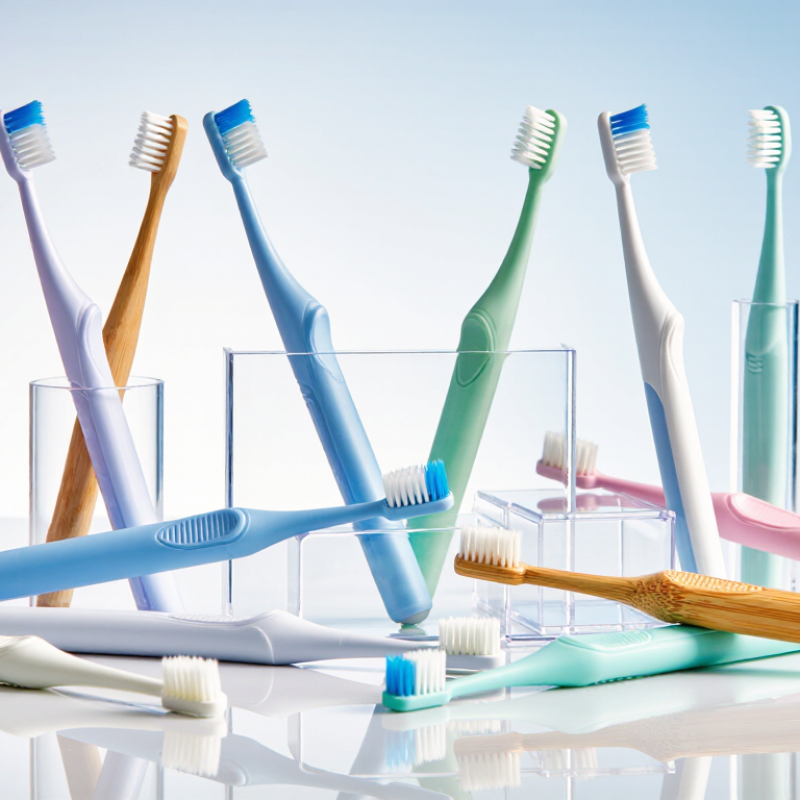
The soft bristle toothbrush supplier market is expanding with global oral-care demand. The World Health Organization’s Global Oral Health Status Report estimates that oral diseases affect nearly 3.5 billion people worldwide. This creates steady purchasing needs across pharmacies, retailers, hospitals, and hospitality channels. Global buyers now examine more than unit price. They compare filament softness, head dimensions, packaging, and production consistency.
Market data also supports continued growth. Fortune Business Insights estimates the global toothbrush market at about USD 7.7 billion in 2023, with further expansion expected through 2032. Soft bristle models remain important because dental professionals commonly recommend them for reducing gum irritation. Suppliers should provide test records for bristle retention, end-rounding, handle strength, and hygiene controls. ISO 20126 is a useful reference for toothbrush quality evaluation.
The market is not perfectly transparent. Some suppliers publish impressive capacity figures but offer limited batch-level evidence. That caveat matters. Global buyers should request recent inspection reports, material declarations, sample approvals, and production photographs. A practical review might include brushing tests, carton drop tests, and checks under different storage temperatures. Recycled packaging can support sustainability goals, although its moisture resistance may require closer testing. Lead times also deserve attention, especially for customized handles and multilingual packaging. Cheap samples can mislead. A supplier’s real performance appears during repeated production, not one attractive shipment.
Soft Bristle Toothbrush Supplier Market Overview for Global Buyers
The chart compares typical nylon filament diameters used in toothbrush bristle classifications. Smaller diameters generally produce a softer brushing feel, while buyers should confirm final softness, tip-rounding quality, trim profile, packaging, and compliance requirements with each supplier.
For global buyers, soft bristle toothbrushes are not a single product category. Common types include standard flat-trim brushes, tapered-tip brushes, ultra-soft gum-care brushes, children’s sizes, and replaceable electric heads. Each design changes cleaning reach, pressure control, and user comfort. A 2024 Grand View Research report estimates the global toothbrush market will grow steadily through 2030, reflecting continued demand for daily oral-care products. Softness alone does not prove quality.
Most soft bristles use nylon, especially engineered filaments with rounded or tapered ends. Polybutylene terephthalate, or PBT, is also used for resilient filaments with lower moisture absorption. Handles commonly combine polypropylene or ABS plastic, while thermoplastic elastomers can improve grip around wet sinks. Some suppliers offer bamboo or wood handles, but buyers should check coating durability, moisture resistance, and responsible sourcing evidence. Material claims require documentation.
A soft brush should feel flexible, not shapeless. That distinction matters. The American Dental Association advises choosing a soft-bristled toothbrush and using gentle pressure, while excessive force may irritate gums. The World Health Organization links effective oral hygiene with reduced oral disease burden, but brush performance still depends on technique and replacement habits. Suppliers should request filament diameter, end-rounding results, tuft retention, handle composition, packaging tests, and applicable quality certificates. Marketing language can be vague. That assumption needs testing. In practice, a cheaper brush may perform well, while an expensive one may fail basic durability checks. Sampling remains essential before large-volume purchasing.
Global buyers should evaluate soft bristle toothbrush suppliers through evidence, not polished catalogs. The World Health Organization’s Global Oral Health Status Report (2022) estimates that oral diseases affect nearly 3.5 billion people worldwide. That scale increases the need for safe, consistent, and affordable products. Ask manufacturers for filament diameter, bristle-end polishing results, handle material specifications, and production-batch records. “Soft” is not a sufficient technical description.
Request testing aligned with ISO 20126, which covers general requirements for manual toothbrushes, and ISO 22254, which assesses tuft retention. Review recent laboratory reports, not only certificates uploaded years ago. A practical audit should inspect bristle trimming under magnification. Sharp or uneven ends can feel rough against the gums. Check packaging seals, barcode traceability, moisture protection, and carton compression after a simulated warehouse journey.
Experience still matters. Order samples from several production lots and compare stiffness after repeated wetting. Test handle grip with wet hands. Small details expose weak controls.
However, laboratory data can also mislead when sampling is too narrow. Require the sampling plan and test conditions. Suppliers should explain corrective actions for failed lots, rather than hiding behind averages.
Pricing deserves scrutiny, too. Extremely low offers may reflect thinner filaments, rushed finishing, or unstable raw materials. A reliable partner provides clear specifications, repeatable quality, and honest limitations. Sometimes, the best supplier is not the cheapest one.
Global buyers should assess soft-bristle toothbrush suppliers through documented quality systems, not attractive samples alone.
The 2022 WHO Global Oral Health Status Report estimates that nearly 3.5 billion people live with oral diseases. That scale makes consistent hygiene performance essential.
The 2022 WHO Global Oral Health Status Report estimates that nearly 3.5 billion people live with oral diseases.
ISO 20126:2019 provides testing guidance for manual toothbrushes, including tuft retention, chemical resistance, and impact resistance.
Suppliers should provide test reports for bristle end-rounding, trim uniformity, handle strength, and microbial control.
The Global Burden of Disease 2019 study, published in The Lancet, also identified untreated dental caries as one of the world’s most prevalent conditions. Softness must not reduce cleaning reliability. It sometimes does.
Ask for batch records, inspection photographs, and traceability from filament to carton. ISO 9001 certification can support process control, but a certificate cannot replace product testing. Independent laboratory verification is still necessary.
Ask for batch records, inspection photographs, and traceability from filament to carton.
Customization may include:
Materials should be reviewed against destination-market chemical requirements, including REACH where applicable.
Sample approval should cover several production lots, not one perfect prototype. That extra step costs time. It prevents expensive surprises.
Global buyers seeking soft bristle toothbrush suppliers in 2026 should compare landed cost, not factory price alone. A quotation may exclude tooling, inner cartons, inspection fees, freight, and import charges. Ask for FOB and delivered estimates. Use the same specification for every supplier.
Define the product clearly. State bristle softness, filament diameter, head size, handle material, packaging format, and required quantity. Request samples from at least three factories. Check tuft security, end-rounding, handle balance, and packaging strength. A useful test is simple: brush the sample against a dry mesh, then inspect loose filaments. Small defects often appear before mass production.
Supplier selection needs evidence. Review factory capacity, quality records, material traceability, and production lead times. Ask for recent inspection reports, laboratory documents, and corrective-action records. Confirm whether the supplier can meet destination-market requirements. Certificates should match the actual factory and product, not just a trading company’s file. That detail is easy to miss.
Pricing changes with resin costs, labor, order volume, and shipping routes. Negotiate payment terms carefully, but do not reward the lowest offer automatically. A very low quote may signal thinner handles, weaker packaging, or untested filaments. Request a pilot order with written acceptance criteria. Leave room for improvement. My preferred scorecard is practical, but it can still overlook communication problems during peak season. A monthly review helps expose those gaps.
Compare flat-trim, tapered-tip, ultra-soft gum-care, children’s, and replaceable electric heads. Each design changes reach, pressure control, and comfort. Softness alone proves little.
Nylon is common, including rounded and tapered filaments. PBT offers resilience and lower moisture absorption. Handles may use polypropylene, ABS, or thermoplastic elastomers. Bamboo handles need moisture and sourcing evidence.
Bristles should feel flexible, not shapeless. Gentle pressure is important. Excessive force may irritate gums. Check filament diameter and end-rounding results. Marketing terms can mislead.
Request bristle softness, filament diameter, head size, handle material, packaging format, and order quantity. Also request tuft retention and quality documents. Use identical specifications for every supplier.
Request samples from at least three factories. Brush each sample across dry mesh. Inspect for loose filaments afterward. Check tuft security, handle balance, and package strength. Simple, but useful.
Compare landed cost, not factory price alone. Include tooling, inner cartons, inspections, freight, and import charges. Request both FOB and delivered estimates. Cheap quotes can hide costs.
Review factory capacity, quality records, material traceability, and production lead times. Ask for recent inspection reports and laboratory documents. Certificates should match the actual factory and product. That detail is easy to miss.
Do not reward the lowest offer automatically. A low price may reflect thinner handles or weaker packaging. Use a pilot order with written acceptance criteria. Review performance monthly. No scorecard is perfect.
This guide provides global buyers with a practical overview of the Soft Bristle Toothbrush supplier market, including demand trends, common product categories, and the materials used in handles, bristles, packaging, and supporting components. It explains how different designs may serve children, adults, sensitive gums, travel needs, or promotional programs, while highlighting the importance of comfort, durability, hygiene, and user safety.
The article also outlines how to evaluate manufacturers and suppliers through production capacity, quality control systems, communication, sampling, lead times, and order flexibility. Buyers will learn how certifications, testing, packaging customization, private labeling, and sustainability options can affect supplier selection. In addition, it discusses global sourcing considerations such as pricing structures, minimum order quantities, shipping terms, payment conditions, and total landed cost. By comparing suppliers systematically and confirming product specifications before placing an order, importers, distributors, retailers, and institutional buyers can develop reliable purchasing strategies and build long-term supply partnerships.

Jiasheng