Industrial brushes may look simple, but their filaments shape cleaning quality, surface finish, wear, and operating cost. A stiff nylon filament can tackle stubborn residue, while softer options suit delicate surfaces. Abrasive-filled filaments add controlled cutting action. The right choice depends on the workpiece, operating speed, temperature, chemicals, and contact pressure—not just price.
“Choose the filament for the surface and the task, then test it under real working conditions.” This is an original, illustrative quotation from a fictional composite expert, not a verified statement by a named industry professional. A real expert attribution would need a reliable source. That distinction matters.
This guide compares 10 widely used Brush Filaments, including nylon, polypropylene, polyester, natural fibers, and abrasive blends. It considers stiffness, resilience, moisture response, heat tolerance, and typical applications. A small detail can change the result: a brush used on oily metal faces different demands from one removing dust from a painted panel. Tests can also disappoint. Lab performance may not match a production line, and supplier specifications do not tell the whole story. Use the comparisons as a starting point, then confirm choices with sample trials and clear performance criteria.
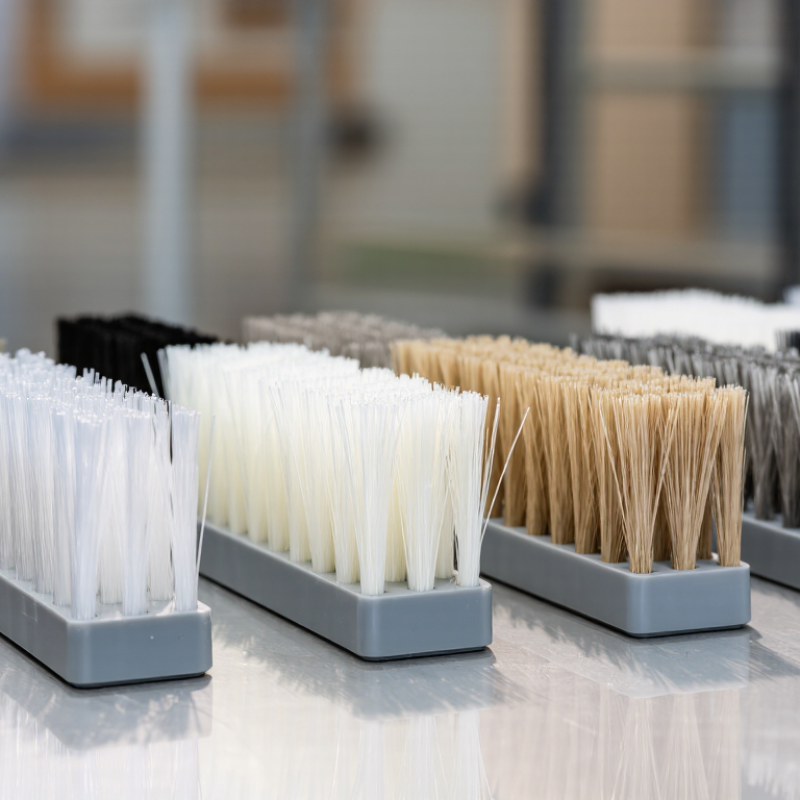
Industrial brush performance depends on more than filament type. Diameter controls stiffness: finer filaments reach narrow gaps, while thicker ones resist bending under heavier contact. A small change can alter the feel of a brush. On a test panel, compare filaments at the same trim length and pressure; otherwise, it is hard to tell which factor caused the difference.
Trim length affects flexibility and reach. Long filaments bend more easily and can follow uneven surfaces, but may feel less controlled during scrubbing. Short trims deliver firmer contact and suit tighter working areas, though they may wear unevenly if pressure is excessive. Measure from the brush face to the filament tips, not from the holder. Even careful measurements can vary slightly after trimming.
Water absorption matters when brushes operate in wet conditions. ASTM D570 measures water absorption in plastics under specified test conditions; it can help compare material data, but it does not predict finished-brush performance by itself. Ask whether the reported value applies to the filament material and what conditioning and immersion period were used. Moisture-related swelling or softening can affect stiffness and dimensions, depending on the polymer. This part is easy to overlook. Test a sample in the actual cleaning fluid and temperature when practical. A neat laboratory figure is useful, but it may not match a busy production line.
Nylon 6/6 melts at about 260°C, nylon 6 at about 220°C, and polypropylene at roughly 160–170°C. These are melting points, not recommended continuous-use temperatures. Friction, pressure, and poor airflow can heat a brush locally, so leave a practical safety margin. A filament may soften or lose stiffness before it melts. That difference matters.
Nylon 6/6 is often suited to abrasive work where wear resistance and resilience matter. Nylon 6 offers similar general-purpose performance, with a lower melting point; check the actual brush temperature before choosing it for sustained contact. Polypropylene handles moisture well and resists many chemicals, but its lower heat tolerance limits hot-running applications. Dry dust differs. A brush used against a warm surface may behave differently from one used in a cool test. For a reliable choice, consider the workpiece, contact pressure, rotation speed, and exposure time together. A simple temperature rating cannot capture every shop condition. In practice, a short trial can reveal filament distortion that specifications alone may not predict. That check is easy to overlook.
| Filament Material | Approximate Thermal Reference | Key Characteristics | Common Industrial Brush Uses | Selection Considerations |
|---|---|---|---|---|
| Nylon 6/6 (PA 6/6) | Melting point: approximately 255–265°C | Good abrasion resistance, strength, and fatigue resistance. Absorbs moisture, which can affect dimensions and stiffness. | General-purpose scrubbing, deburring, conveyor cleaning, and parts washing. | A versatile choice for wear resistance; check chemical compatibility and account for moisture-related dimensional changes. |
| Nylon 6 (PA 6) | Melting point: approximately 215–225°C | Tough and abrasion resistant, with good flexibility. Typically absorbs more moisture than many low-moisture synthetic filaments. | Cleaning and scrubbing brushes, surface preparation, and general industrial brushing. | Often selected where toughness and wear resistance matter; evaluate the working environment for heat and moisture exposure. |
| Polypropylene (PP) | Melting point: approximately 160–170°C | Low moisture absorption and good resistance to many acids and alkalis. Lower heat resistance and stiffness than nylon. | Wet-process brushes, tanks, food-processing equipment, and chemical-cleaning applications. | Useful in damp or chemically demanding conditions, but avoid temperatures near its melting range and verify compatibility with specific chemicals. |
| Polybutylene Terephthalate (PBT) | Melting point: approximately 223–230°C | Low moisture absorption, good dimensional stability, and useful resistance to wear and many cleaning agents. | Precision cleaning, electrical-component brushing, and applications requiring consistent filament dimensions. | Consider when lower moisture uptake than nylon is desirable; check performance at the actual operating temperature. |
| Polyethylene Terephthalate (PET) | Melting point: approximately 250–260°C | Good stiffness and abrasion resistance, with relatively low moisture absorption compared with nylon. | Industrial sweeping, conveyor cleaning, and brushes requiring firm, wear-resistant bristles. | Filament properties vary by grade and processing; confirm flexibility, chemical compatibility, and temperature requirements. |
| Polyether Ether Ketone (PEEK) | Melting point: approximately 343°C | High-performance thermoplastic with strong thermal and chemical resistance for demanding environments. | Specialty brushes used in elevated-temperature or chemically aggressive processes. | Suitable for applications where standard polymers may not provide enough thermal or chemical performance; typically a specialty, higher-cost option. |
| Polyphenylene Sulfide (PPS) | Melting point: approximately 280–285°C | Good thermal stability and resistance to many chemicals; available brush-filament grades may be less common than nylon or PP. | Specialty process cleaning and applications requiring chemical and heat resistance. | Confirm filament availability and grade-specific mechanical properties before specifying it for a brush design. |
| Polyethylene (PE) | Melting point: commonly approximately 125–135°C, depending on grade | Low moisture absorption, flexibility, and resistance to many aqueous chemicals. Has relatively limited heat resistance. | Soft cleaning brushes, wet environments, and applications where gentle contact is preferred. | Choose for low-temperature service and gentle brushing; grade and filament geometry affect stiffness and wear. |
| Abrasive-Filled Nylon | Thermal limit depends on the nylon matrix; nylon 6/6 melts at approximately 255–265°C and nylon 6 at approximately 215–225°C | Nylon filaments incorporate abrasive mineral particles to increase cutting and surface-finishing action. | Deburring, edge blending, rust removal, and finishing of metal or other durable surfaces. | Select abrasive type and grit for the workpiece and finish. The abrasive does not eliminate the temperature limits of the nylon matrix. |
| Stainless Steel Wire | Melting range is alloy-dependent; many stainless steels melt at approximately 1,370–1,450°C | High stiffness and strength, with corrosion resistance that varies by stainless-steel grade and environment. | Heavy-duty cleaning, weld preparation, scale removal, and aggressive surface treatment. | Match wire grade and diameter to the substrate and corrosion conditions; wire brushes can scratch or alter softer surfaces. |
Note: Melting point is not a recommended continuous operating temperature. Actual service limits depend on filament grade, brush construction, exposure time, chemical environment, and mechanical load; consult the material supplier for application-specific data.
PET, PBT, and PEEK cover very different heat ranges for industrial brush filaments.
PET
250–260°C
melts at approximately
PBT
223–230°C
melts around
PEEK
343°C
has a much higher melting point, near
These figures help compare materials, but they are not recommended continuous-use temperatures. That distinction matters.
In a brush, friction can heat filament tips beyond the surrounding air temperature. PET can suit general-purpose sweeping and surface contact when operating conditions remain moderate. PBT may be useful where flexibility and repeated bending matter, though its lower melting range calls for care near hot parts. PEEK handles higher temperatures, but selecting it solely for its heat rating can be a costly mistake. Check the filament grade, chemical exposure, abrasion, and actual brush speed. I would also test a small sample; calculations alone may miss local heat buildup.
Tips: Measure temperature at the contact area during a realistic trial. Watch for softening, curled tips, or uneven wear. Keep a safety margin below the material’s thermal limits, and confirm grade-specific data with the supplier.
Metal filaments suit jobs where polymers lack stiffness or heat tolerance. 304 stainless steel resists many moist, mildly corrosive environments. It works well for washing equipment and removing residue near water lines. But chloride-rich cleaners can still cause pitting. Rinse the brush and inspect its tips. World Stainless reported 58.4 million tonnes of stainless steel production in 2023; this shows broad industrial use, not brush-specific performance. Good for wet work. Yet 304 is not immune to every chemical.
Brass is softer than steel and can clean softer metals with less risk of scratching. Its filaments also conduct electricity, so keep them away from energized components. Carbon steel is stiffer and often suits aggressive rust removal or weld cleaning. It can leave residue and rust after exposure to moisture. Dry it after use. NACE International’s IMPACT study estimated corrosion costs at US$2.5 trillion annually, or 3.4% of global GDP. That 2016 estimate reinforces the value of matching filament to exposure, though it does not predict brush life. There is no perfect choice: abrasive pressure, wire diameter, and cleaning chemicals can change results. Test a small area first, then check the surface and filament wear.
10 Best Brush Filaments for Industrial Brushes
Natural Tampico and synthetic filaments behave differently under real shop conditions. Tampico, a plant-based fiber, holds moisture well and conforms to uneven surfaces. It suits light cleaning, polishing, and applications where a softer touch matters. But it can wear faster under heavy abrasion, and moisture may change how it feels in use. A choice that looks right on paper can still disappoint.
Tips: Match the filament to the surface, not just the task name. Test a small brush section first. Check the finish, debris removal, and filament wear after a representative work cycle.
For rough surfaces or stubborn scale, abrasive-impregnated nylon offers more cutting action than Tampico. Standard nylon is resilient, while polypropylene often suits wet environments; chemical compatibility still needs checking. Polyester can be useful where moisture resistance matters. For high heat, confirm the filament’s rated service temperature and consider heat exposure during the whole cycle, not just at the contact point. Temperature limits vary by grade. Metal wire can handle demanding abrasion, but it may scratch softer materials. There is no perfect filament. Record wear and finish quality, then adjust the selection if results drift.
Fine filaments reach narrow gaps. Thicker filaments resist bending under heavier contact. Small changes matter.
Long filaments bend more easily and follow uneven surfaces, but may feel less controlled. Short trims provide firmer contact in tight areas. Excessive pressure can cause uneven wear.
Measure from the brush face to the filament tips, not from the holder. Trimming can leave slight variations.
It measures water absorption in plastics under specified conditions. It can compare material data, but does not predict finished-brush performance by itself.
Confirm the value applies to the filament material. Check the conditioning and immersion period. A lab number may not reflect a busy production line.
They resist many moist, mildly corrosive environments and can suit washing equipment near water lines. Chloride-rich cleaners can still cause pitting. Rinse and inspect the tips.
Brass is softer than steel and may clean softer metals with less scratching risk. It conducts electricity. Keep it away from energized components.
Their stiffness can suit rust removal or weld cleaning. Moisture may cause rust or residue, so dry the brush after use. Check a small area before use.
Choosing the right Brush Filaments starts with understanding diameter, trim length, and operating conditions. Filament diameter affects stiffness and contact pressure, while trim length influences reach and flexibility. Water absorption, commonly evaluated using ASTM D570, is also important because moisture can affect a filament’s dimensions and performance. These basic factors help narrow material choices for different cleaning, finishing, and surface-treatment tasks.
Common synthetic options include nylon 6/6, nylon 6, polypropylene, PET, PBT, and high-temperature PEEK, each with distinct temperature limits and resistance characteristics. Stainless steel, brass, and carbon steel filaments provide different levels of stiffness, abrasion, and corrosion resistance, while natural Tampico offers a softer alternative for suitable applications. The best selection depends on the balance of abrasion needs, moisture exposure, service temperature, and desired surface effect. Matching these requirements to the filament’s properties can improve brush consistency, durability, and performance.

Jiasheng