Choosing Replacement Brush Heads can shape more than a product listing. It affects replenishment, customer experience, and the amount of inventory your business needs to manage. A well-matched head helps customers keep using a compatible handle instead of replacing the entire unit. That can make repeat purchasing simpler. Small details matter: bristle firmness, attachment fit, packaging clarity, and reliable supply. A mismatch can mean complaints, returns, or a customer who does not come back.
Product-design expert Don Norman wrote, “Good design is actually a lot harder to notice than poor design.” His observation offers a useful lens for replacement products: fit and ease of use should feel straightforward, not like extra work. For businesses, that means checking compatibility claims, testing samples, and explaining which models each head fits. Speak with suppliers about materials, quality checks, lead times, and order minimums. Do not assume every head that looks similar will perform the same.
There is a trade-off. Lower unit prices may look attractive, yet inconsistent fit or delayed shipments can erase the savings. And packaging decisions deserve a second look; less packaging is not automatically better if it leaves parts damaged or confusing to identify. Start with customer feedback and actual usage patterns. Then compare options against your service standards, margins, and storage limits. The best choice is not always the cheapest one. It is the one your customers can use confidently, and your team can restock reliably. A little testing helps. So does admitting when a supplier or product choice needs reconsideration.
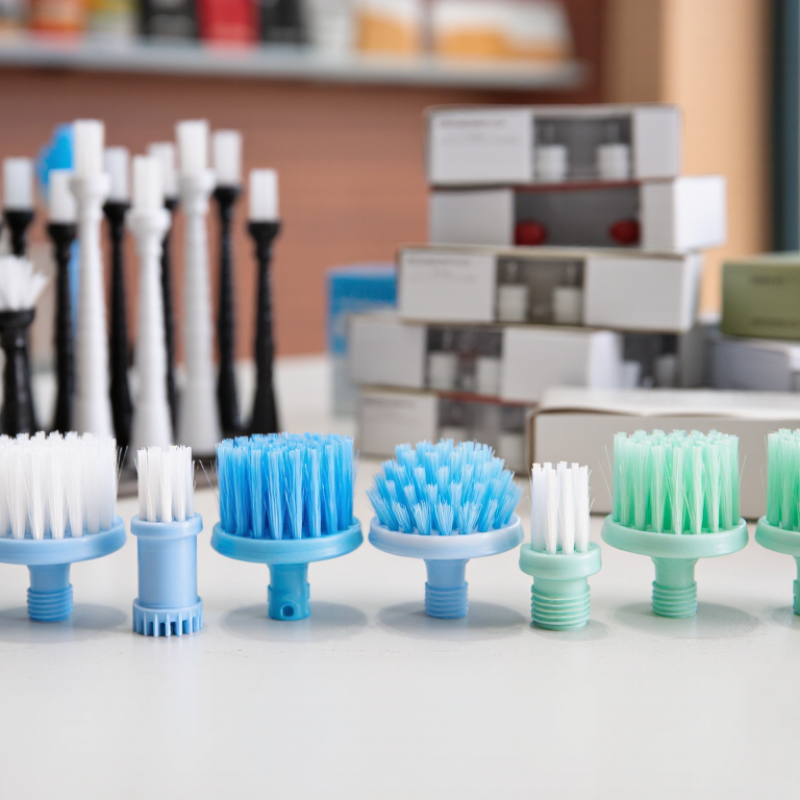
What Replacement Brush Heads Are and How They Work
Replacement brush heads are detachable parts that carry the bristles or filaments used for cleaning. They attach to a reusable handle, motorized tool, or cleaning machine. The exact shape depends on the equipment. Some heads lock in with a click; others use a threaded or keyed connection. A secure fit matters because a loose head can wobble, clean unevenly, or come off during use.
On powered tools, a motor transfers movement through a shaft to the head. It may rotate, oscillate, or move back and forth. The bristles then loosen soil from surfaces while water or cleaning solution helps carry it away. Manual heads rely on pressure and strokes from the user. Simple, but technique still matters. In a busy workplace, staff should check the fit before starting and replace heads with worn, bent, or missing bristles. A damaged head may leave patches behind.
Replacement heads can reduce the need to discard an entire tool, but compatibility is not always obvious. Check the connector, head dimensions, and equipment instructions before ordering. Also consider the surface: stiff bristles may suit durable materials, while softer ones are safer for delicate finishes. There is no single head for every task. Even a well-chosen brush can perform poorly if it is overloaded with debris or used at the wrong angle.
Why Choose Replacement Brush Heads for Your Business?
What Replacement Brush Heads Are and How They Work
A replacement brush head is a detachable bristle unit that fits a compatible reusable handle. The handle transfers motion to the head, helping the bristles clean the surface. Keeping compatible replacement heads on hand lets businesses replace worn heads without replacing the entire handle.
General replacement guidance: The American Dental Association recommends replacing toothbrushes every 3–4 months, or sooner if the bristles are frayed. For powered brush heads, follow the manufacturer’s instructions.
Business Benefits of Choosing Replaceable Brush Heads
Business Benefits of Choosing Replaceable Brush Heads
For commercial cleaning teams, replaceable brush heads can reduce the need to discard an entire tool when bristles wear down. Keep the handle; change the working part. That can simplify purchasing, storage, and routine maintenance across multiple sites. A facilities manager might stock a small range of compatible heads instead of several complete brushes. Fewer bulky items in the storeroom matter.
The U.S. Environmental Protection Agency’s 2018 Advancing Sustainable Materials Management report estimated that Americans generated 292.4 million tons of municipal solid waste, with 32.1% recycled or composted. This is broad waste data, not a measurement of brush-head savings. Still, it gives businesses a useful reason to examine what they discard. Replacing only the worn component may reduce material use, provided the handle lasts and the replacement head performs well.
There are trade-offs. Poor fit can cause wobbling, uneven cleaning, or early wear. Test head changes on real surfaces, and track replacement frequency, labor time, and purchase cost. Small pilot first. Compatibility and dependable supply matter more than a low unit price. A replaceable system is not automatically cheaper or greener; actual results depend on product life, materials, and disposal practices.
Types, Materials, and Compatibility Considerations
Replacement brush heads vary in shape and bristle layout. Flat heads cover broad surfaces, while tapered or compact heads reach narrow gaps and corners. Soft bristles suit delicate surfaces; firmer options can remove stubborn residue but may cause wear. Fit matters. A head that looks similar may still perform poorly if its shape does not match the task.
Material affects durability, feel, and upkeep. Nylon bristles are common because they hold their shape and are available in different stiffness levels. Some heads use alternative fibers, but their performance and wear can differ. Check the bristle tips, base, and attachment after repeated use. Fraying can be easy to miss during a busy shift. Small details count.
Compatibility deserves a close check before ordering in volume. Compare the connector shape, head dimensions, and drive mechanism with the equipment specifications. Some models use a push-fit connection; others require a particular locking design. “Universal” does not always mean a secure fit. Not always. Test a small sample on the intended device, then check for wobbling, uneven movement, and awkward reach. A sample adds time, but replacing a mismatched shipment costs more. Even careful checks can miss a minor difference, so keep the equipment model and head specification together in purchasing records.
How to Compare Quality, Cost, and Supplier Reliability
Why Choose Replacement Brush Heads for Your Business?
Replacement brush heads look simple, but inconsistent fit or loose bristles can create complaints and waste. The World Health Organization’s Global Oral Health Status Report (2022) estimates that oral diseases affect nearly 3.5 billion people worldwide. That scale supports steady demand, but it does not guarantee every product will meet customer expectations. The American Dental Association advises replacing toothbrushes every three to four months, or sooner when bristles become frayed. For buyers, this makes repeat availability important. It also makes quality checks essential.
Compare samples for fit, bristle trimming, stiffness, and how securely the head attaches. Ask suppliers for batch records and test results, not just a polished sample. Check compatibility claims against the actual handle models your customers use. Small differences matter. A head that wobbles on the handle may trigger returns. Compare total landed cost, including packaging, freight, inspection, and expected defect losses. The lowest unit price can be misleading.
Supplier reliability deserves equal attention. Review lead-time history, minimum order quantities, and how the supplier handles delayed or inconsistent batches. Request a written process for reporting defects and replacing affected stock. One uncomfortable point: a strong sample does not prove every production run will match it. Track incoming lots and customer complaints over time. A simple spreadsheet can reveal recurring problems before they become expensive.
Steps for Selecting Brush Heads for Your Business
Why Choose Replacement Brush Heads for Your Business?
Steps for Selecting Brush Heads for Your Business
Start with the task, not the price. A bakery floor, a hotel bathroom, and a vehicle interior need different bristle stiffness and head shapes. Note the surface material, soil type, cleaning frequency, and whether the area has tight corners. Soft bristles can protect delicate finishes, while stiffer bristles may lift stubborn residue from durable surfaces. Too much stiffness can scratch. Check the equipment’s connection type and head dimensions before ordering; a small mismatch can cause wobbling or poor contact. Measure the old head if its specifications are unclear.
Then compare materials, expected wear, and cleaning requirements. Ask suppliers for clear specifications, sample units, and guidance on compatible equipment. Test a head on a small, inconspicuous area before rolling it out across your site. Watch for shedding, uneven wear, and residue left behind. Keep a simple trial record: task, surface, operator feedback, and replacement interval. That helps teams compare performance instead of relying on memory. A spreadsheet helps, but it will not catch every awkward corner. Real use matters. Review stock needs against actual consumption, and avoid buying a large quantity until the fit and cleaning results are confirmed. Replacement schedules may need adjustment as workloads change.
Conclusion
Replacement Brush Heads allow businesses to maintain cleaning and polishing tools without replacing the entire brush assembly. A removable head can be detached and fitted to a compatible handle or machine, helping simplify routine maintenance. For businesses, this approach may reduce replacement costs, limit equipment downtime, and make it easier to keep tools suited to different tasks.
Choosing the right heads involves comparing brush types, materials, sizes, attachment systems, and compatibility with existing equipment. Consider the surfaces and working conditions involved, along with expected durability and performance. When evaluating options, weigh purchase price against service life and consistency, and assess suppliers for clear product specifications, dependable availability, and responsive support. A practical selection process is to define the application, confirm fit, compare quality and total cost, and test a suitable option before placing larger orders.

 Jiasheng